

Moving to a new city requires understanding the daily logistics of grocery runs, work commutes, and regional travel. Blacksburg is uniquely shaped by the presence of Virginia Tech, which heavily influences the local transportation infrastructure. Buyers evaluating homes here often want to know exactly how long it takes to travel across town and what options exist beyond personal vehicles.
The town operates as a compact hub within the broader New River Valley, meaning you rarely have to travel far for daily necessities. Whether you prefer to drive, cycle, or rely on public transit, the local network is designed to accommodate multiple modes of travel. Understanding these options will help you choose a neighborhood that aligns perfectly with your preferred daily routine.
Navigating Blacksburg: Commute Times and Daily Travel
The overall layout of the city supports highly efficient daily trips to major employment centers, retail zones, and the university. Most residents find that their daily travel requires far less time than the national average. The average commute time in Blacksburg is approximately 13 to 15 minutes, which is a significant draw for buyers relocating from major metropolitan areas.
This rapid commute relies on a balanced mix of personal vehicles, extensive public transit, and active commuting like walking or biking. The primary thoroughfare supporting regional travel is US Route 460. This major artery connects the town directly to Christiansburg and the broader New River Valley, ensuring smooth traffic flow for those working outside the immediate town limits.
From a real estate perspective, these incredibly short average commute times are a massive selling point. Buyers can comfortably expand their property search to the outskirts of town without fear of a punishing daily drive.
Blacksburg Transit (BT): Routes, Fares, and Accessibility
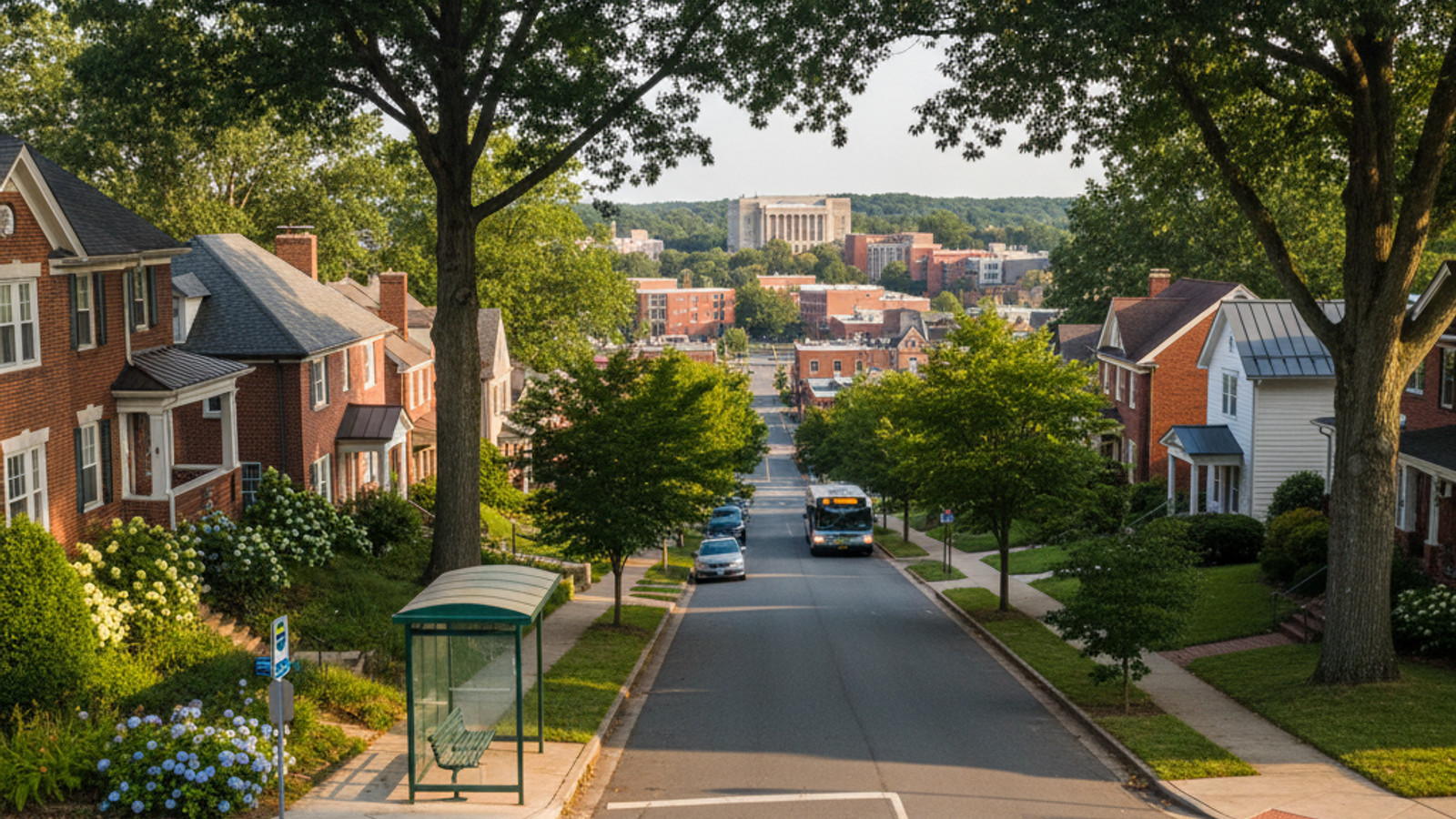
The local bus system, known as Blacksburg Transit (BT), serves as the primary mode of public transportation connecting residential neighborhoods to Virginia Tech and the downtown commercial center. This system is exceptionally robust for a town of this size, featuring 16 distinct bus routes. These routes cover the majority of the city limits and even extend outward into neighboring Christiansburg.
One of the most significant financial advantages for local residents is the current fare structure of the bus system. Blacksburg Transit is currently 100% fare-free for all riders. Eliminating this daily commuting cost provides a tangible economic benefit for residents who rely on public transportation for their daily routines.
Schedule frequency fluctuates throughout the year, with buses running continuously during the academic year and operating on reduced service periods during the summer months. The system also includes BT Access, an ADA-compliant paratransit door-to-door service available for individuals with disabilities. Having a reliable, fare-free transit system fundamentally changes household budgeting and makes neighborhoods along BT routes highly desirable.
Walking and Biking Infrastructure in Town
For those who prefer to navigate their surroundings on foot, the downtown commercial center offers a highly pedestrian-friendly layout. The core downtown area boasts a Walk Score of 81, making it a very walkable zone where most daily errands do not require a car. However, the overall town has an average Walk Score of 43, meaning that neighborhoods further from the center rely more heavily on vehicular or transit connections.
Cyclists and pedestrians also benefit immensely from the Huckleberry Trail, a major 15-mile paved corridor. This extensive path connects Blacksburg to Christiansburg and Radford, serving as a vital artery for both recreation and active commuting. The local infrastructure further supports cyclists with designated bike lanes, secure bike racks, and extensive sidewalk connectivity across major neighborhoods.
Real estate inventory near the Huckleberry Trail or within the downtown walking radius frequently commands a premium. Buyers consistently prioritize immediate access to these paved corridors to minimize their reliance on automobiles.
Driving: Roadways, Traffic, and Parking Availability
Residents who choose to commute by personal car will find that the local roadways are generally easy to navigate, though traffic patterns ebb and flow with the university calendar. Seasonal events, such as university football games or the annual student move-in week, temporarily impact traffic volumes and alter standard travel times. During these peak periods, locals quickly learn to utilize alternate routes or adjust their schedules to avoid congestion near the stadium and campus entry points.
Parking availability depends heavily on your destination within the town. The downtown commercial district utilizes a mix of metered spaces and zoned street parking, which ensures turnover for local businesses. Visitors can typically find a spot, but paying attention to posted time limits is crucial to avoid municipal fines.
Accessing the Virginia Tech campus by car requires navigating a strict parking permit structure. There is no free parking on campus, meaning all vehicles must display a valid permit or utilize metered spaces paid via the ParkMobile app. Factoring in these parking costs and regulations is an essential planning step for anyone who intends to drive to the university daily.
Regional Connectivity: Traveling to Roanoke and Beyond
While the town offers comprehensive local transit, residents also have reliable options for traveling outside the New River Valley to major regional transit hubs. The Smart Way Commuter Bus provides regular, scheduled service directly connecting Blacksburg to the Roanoke Valley. This route connects the Virginia Tech Squires Student Center to the Campbell Court transfer station in downtown Roanoke, making regional commuting straightforward.
The Smart Way bus charges an approximate one-way fare of $3.00, offering an incredibly cost-effective alternative to driving. For commercial air travel, the Roanoke-Blacksburg Regional Airport is the closest major hub, located roughly 40 miles away via Interstate 81. Residents frequently utilize ridesharing services like Uber and local taxi companies for direct trips to the airport when they prefer not to leave a personal vehicle in long-term parking.
The availability of the low-cost Smart Way bus ensures that residents are never isolated from broader regional amenities. This connectivity is a major reassurance for out-of-state buyers who want easy access to commercial flights and larger city infrastructure.
Frequently Asked Questions About Transit
Do you need a car to get around Blacksburg, VA?
While a car is helpful for reaching the outer edges of the New River Valley, it is not strictly necessary for daily errands within the town center. The combination of a 100% fare-free bus system and a highly walkable downtown allows many residents to comfortably live car-free. If you live near a bus route or the Huckleberry Trail, you can easily navigate your daily routine without a personal vehicle.
Are buses free in Blacksburg, VA?
Yes, the Blacksburg Transit (BT) system is currently completely fare-free for all riders. This includes all 16 routes that service the town and the connections into neighboring Christiansburg. This ongoing initiative removes a significant financial barrier for residents relying on daily public transportation.
Is Uber available in Blacksburg, VA?
Uber and other major ridesharing companies operate actively throughout the area. These services are particularly popular for evening travel, trips to the Roanoke-Blacksburg Regional Airport, or navigating around town during major university events. Wait times are generally short, especially near the downtown corridor and university campus.
Check out this article next