


Southwest Virginia offers a distinct contrast in real estate environments for buyers looking along the Blue Ridge Mountains. Choosing the right property often comes down to understanding the structural differences between a planned university town and a rural mountain municipality. Both locations present unique zoning laws, property tax implications, and inventory constraints in the current 2026 market.
Buyers evaluating these two areas must weigh proximity to major employment centers against the desire for unrestricted land. Navigating this regional market means looking closely at objective data rather than relying on general impressions.
Real Estate Market Comparison: Blacksburg vs. Floyd
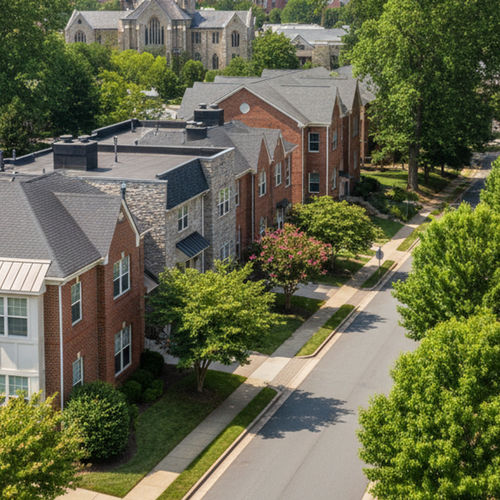
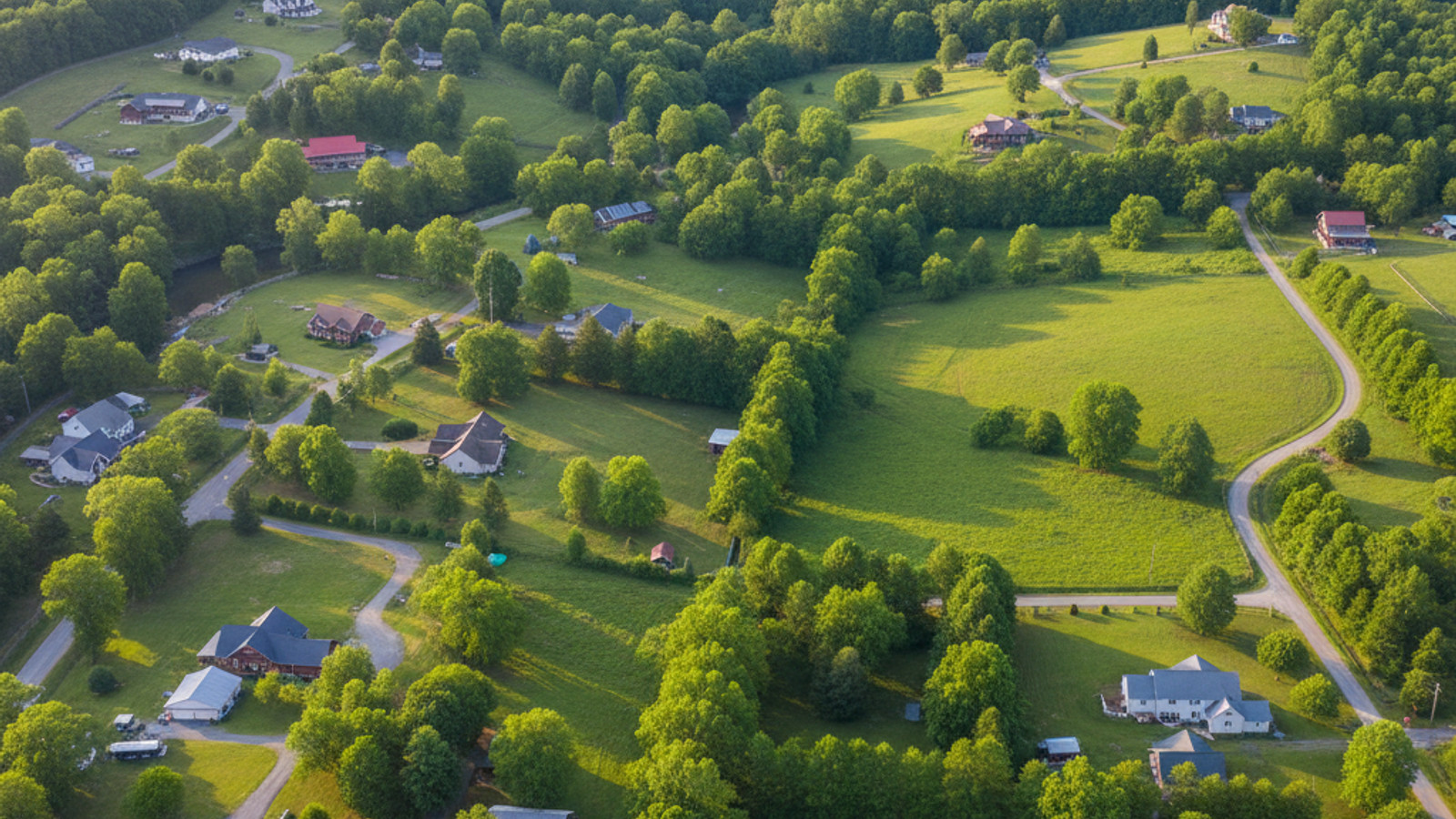
Blacksburg and Floyd sit close together geographically but operate as very different housing markets. Blacksburg is heavily anchored by Virginia Tech, which drives consistent demand for housing and shapes local development around detached single-family homes. Floyd, by contrast, is rural — buyers there are typically after larger parcels and acreage rather than tight residential lots.
Despite these differences, prices have converged. Inventory is tight in both areas, pushing Blacksburg's 2026 median home price into the $500,000–$600,000 range, while Floyd's median sits just under $500,000, driven by limited acreage supply rather than housing demand.
Property taxes are where the two markets diverge sharply, and they meaningfully affect long-term holding costs. Montgomery County (which contains Blacksburg) levies roughly $0.81 per $100 of assessed value in 2026, while Floyd County's rate sits around $0.55. On a similarly priced home, that gap can reduce a Floyd buyer's monthly escrow requirements substantially.
Available Property Types and Land Use
Buyers looking in Blacksburg will frequently encounter properties managed by homeowners associations. These dense residential subdivisions often come with strict architectural guidelines and shared maintenance responsibilities.
The real estate landscape in Floyd is shifting toward agricultural zoning and unrestricted land use. Buyers seeking properties without HOA oversight or those looking to establish private workshops will find more options here. The trade-off for this flexibility is often a longer driving distance to municipal utilities.
Commute Times and Regional Employment Hubs
Infrastructure and travel routes are critical factors when comparing these two locations. The primary connection between Floyd and the economic centers of Christiansburg and Blacksburg is Route 8 North. This two-lane highway typically requires a 30 to 40-minute driving commute depending on weather and traffic conditions.
The Virginia Tech Corporate Research Center serves as a massive employment hub for the region. The facility houses over 225 companies and employs approximately 3,500 people, including technical professionals like JavaScript developers and engineers.
Buyers working at the research park must factor the daily drive along Route 8 into their relocation decision if they choose a rural property.
Regional transit relies heavily on personal passenger vehicles, as public transportation does not connect the Route 8 corridor. Buyers also frequently look toward Roanoke, VA, as a secondary employment center accessible from both municipalities. The objective reality is that living in a rural county requires a reliable vehicle and a willingness to commute.
Objective Local Amenities and Infrastructure
Commercial and public amenities differ sharply based on the population density of each municipality. Blacksburg features extensive municipal parks, paved walking trails, and a highly developed downtown commercial district. Floyd provides direct access to the Blue Ridge Parkway and a centralized downtown area focused on local agriculture and independent retail.
The local public school systems and their athletic programs serve as major community fixtures in both locations. Montgomery County Public Schools support the Blacksburg High School Bruins, utilizing large-scale athletic complexes and modern academic buildings. Floyd County Public Schools are home to the Floyd County High School Buffaloes, with facilities centralized near the district's main town.
Residents heavily attend varsity football and basketball games to support the local sport programs. Fans actively track the latest scores and game highlights throughout the season to follow their favorite local football team.
Both school districts offer dedicated digital platforms where residents can watch live broadcasts or use live streaming to stay connected to the athletic calendar.
Frequently Asked Questions About Blacksburg vs. Floyd Real Estate
What is the nicest neighborhood in Blacksburg, VA?
Real estate professionals measure a neighborhood's standing by looking at median property values and proximity to the Virginia Tech campus. The highest-valued residential areas typically feature established subdivisions with strict architectural guidelines and higher homeowners association fees. Properties in these planned developments frequently command prices well above the $600,000 mark.
What are the key differences between Blacksburg, VA and Floyd, VA?
Blacksburg features a dense, university-driven real estate market dominated by planned communities and townhomes. Floyd offers a rural environment focused on unrestricted acreage and detached single-family homes. The property tax structure also differs significantly, with Montgomery County assessing at $0.81 per $100 compared to $0.55 per $100 in Floyd County.
Is Floyd, VA a nice place to live?
Buyers seeking unrestricted land, agricultural zoning and direct access to the Blue Ridge Parkway find the area highly appealing. The municipality provides a rural lifestyle with substantial acreage availability compared to neighboring towns. Residents trade immediate access to large commercial centers for lower property taxes and increased privacy.
Is Floyd, VA worth visiting?
The area features distinct commercial and recreational amenities that draw regular visitors from across the region. The downtown district offers independent retail and agricultural markets, while the nearby Blue Ridge Parkway provides extensive outdoor infrastructure. Visitors frequently travel Route 8 to access these objective geographical landmarks.
Check out this article next