


Understanding the history of Blacksburg VA offers a serious advantage for anyone looking to purchase property in Montgomery County today. The town has evolved from a small agricultural settlement into a thriving university hub, and those historical layers are still highly visible in the local real estate market. Buyers often notice the distinct architectural shifts as they walk from the bustling downtown commercial corridors into the established residential grids.
Knowing how this area developed helps you make sense of current property lines, municipal zoning restrictions, and neighborhood layouts. Whether you are eyeing a renovated century-old home near the downtown center or a mid-century build further out, the town's past directly influences property values. Learning about these historical roots gives you a clearer picture of what it means to own a piece of Blacksburg real estate.
The local market is heavily shaped by the original town planning and the subsequent growth of the university. Recognizing these historical growth patterns allows investors and buyers to identify which neighborhoods hold the most long-term appreciation potential.
The Founding and Early History of Blacksburg
The early history of the area traces back to a mid-1700s frontier settlement known as Draper's Meadow. This initial community was primarily agricultural, relying on the fertile land of the region to sustain early settlers. The landscape was dominated by expansive estates, with the influential Smithfield Plantation serving as a major economic driver for the developing region.
Unfortunately, the Draper's Meadow settlement is also remembered for a violent conflict in 1755 known as the Draper's Meadow massacre. This event temporarily halted local expansion, but the area eventually stabilized as new agricultural pioneers arrived. The resilience of these early residents laid the groundwork for a more permanent and structured municipality.
The town itself was officially founded in 1798 by William Black. He established the municipality on 600 acres of land that he had inherited from his father, Samuel Black, who originally purchased the tract in the 1770s. This original footprint established the core layout for the modern downtown center you see today.
Black's initial layout was highly organized, featuring a small grid of streets divided into exactly 16 blocks. This structured approach to town planning was somewhat unusual for rural mountain settlements at the time. For modern buyers, this original 16-block grid remains the most highly coveted and historically rich real estate in the area.
Virginia Tech's Impact on Local Infrastructure
The trajectory of the town changed permanently in 1872 with the founding of the Virginia Agricultural and Mechanical College, which is known today as Virginia Tech. This institution was established following the state's purchase of the Preston and Olin Institute, a local school building. The arrival of a state-funded college rapidly transformed the area from a quiet rural village into a structured, forward-looking town.
As the university grew, it drove massive early infrastructure improvements that benefited the surrounding residential areas. The need to support a growing university population led to the installation of early utility lines and the creation of reliable transit routes. These municipal upgrades dramatically increased the value of nearby properties and set a high standard for future town development.
The expansion of the Virginia Tech campus directly influenced commercial development along Main Street and College Avenue. Businesses flocked to these corridors to serve the university, creating the vibrant downtown center that still anchors the local economy. Historical campus landmarks, such as the widely recognized Duck Pond, became integrated into the daily life and aesthetic appeal of the surrounding neighborhoods.
Property near the Virginia Tech campus commands a significant premium today due to this deeply intertwined history. Homes within a mile of the original campus footprint frequently sell for well over $500,000 depending on their condition.
Proximity to these original infrastructure hubs remains one of the strongest predictors of long-term property appreciation in Montgomery County.
Exploring Blacksburg's Historic Districts
The preservation of the town's architectural heritage is managed through designated historical zones. The original town grid is bounded by four present-day roads: Draper Road, Jackson Street, Wharton Street, and Clay Street. Buyers looking at homes for sale in Blacksburg will find that properties within these boundaries offer a unique glimpse into the 19th-century origins of the municipality.
The Blacksburg Historic District officially protects the original 16 squares laid out by William Black. This preservation effort ensures that the early streetscapes and historical sightlines remain intact despite modern development pressures. Owning a home in this specific district requires adherence to strict municipal guidelines regarding exterior modifications.
Buyers purchasing within the Blacksburg Historic District must navigate several specific municipal guidelines:
Exterior paint colors and material changes must be approved by the local architectural review board.
Original historical windows generally require restoration rather than replacement with modern vinyl alternatives.
Any new additions must match the historical massing, rooflines, and scale of the original structure.
Adjacent to this area is the Draper Road Historic District, which features its own distinct lot sizes and grid layout. This area is heavily defined by its immediate proximity to the downtown commercial center, making it highly desirable for buyers seeking walkable access to local amenities. The properties here often feature slightly larger lots than the original 16 blocks, reflecting a later phase of town expansion.
Purchasing real estate in either of these historic districts is a commitment to local preservation. The architectural restrictions can increase renovation costs, but the payoff is a highly resilient property value insulated from overdevelopment.
The Evolution of Blacksburg Property Types
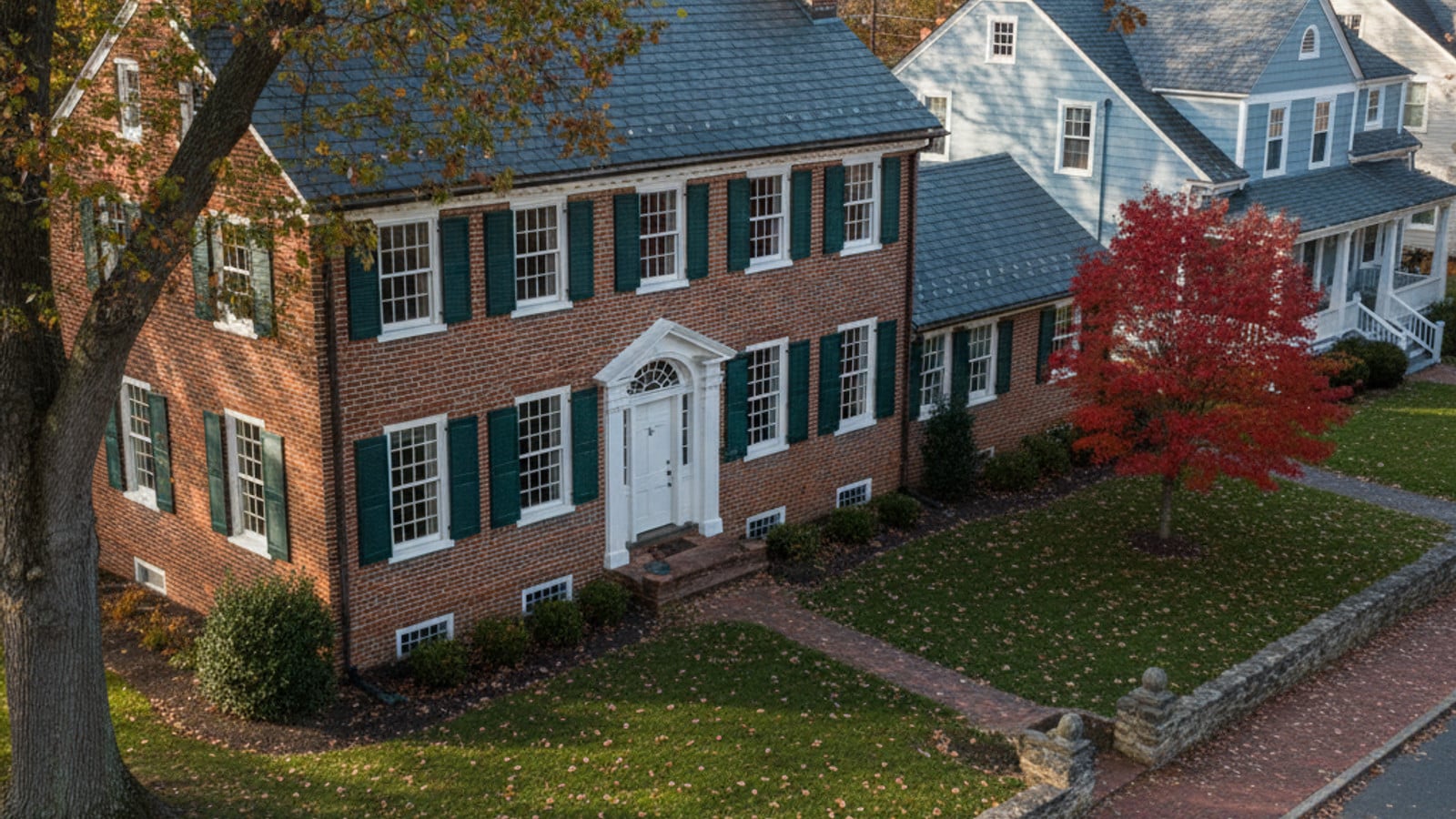
The residential architecture in the area has shifted dramatically over the past two centuries. Early 19th-century structures were primarily functional, consisting of simple log cabins and utilitarian agricultural farmhouses built to withstand mountain winters. As the local economy stabilized and transportation improved, these modest builds gave way to more substantial, structured brick residences near the downtown core.
The rapid expansion of the university in the mid-20th century triggered a massive wave of varied housing developments. Contractors built entire neighborhoods of mid-century modern homes, brick ranch-styles, and split-levels to accommodate the influx of new residents. These mid-century properties now make up a significant portion of the accessible housing inventory located just outside the historic center.
Amidst these evolving neighborhoods, prominent historical landmarks remain deeply embedded within residential zones. The Alexander Black House is a prime example, standing as a beautifully restored Queen Anne-style home that now operates as the Blacksburg Museum and Cultural Foundation. Structures like this serve as anchor points that elevate the historical prestige of the surrounding streets.
Modern buyers must navigate how historical zoning impacts their renovation plans. Properties designated as historic or located within protected overlay districts face strict reviews for any exterior alterations. Understanding these municipal rules early in the buying process is essential for anyone planning to update an older property.
The architectural diversity means buyers have options ranging from 1920s bungalows to 1970s split-levels within a short radius. Recognizing which era of construction you are purchasing into helps you anticipate common maintenance needs and structural characteristics.
Frequently Asked Questions About Blacksburg's History
Why is Blacksburg called Blacksburg?
The town was officially named after its founder, William Black. He established the original municipal grid of streets in 1798 on 600 acres of land inherited from his family. Today, properties located within that original footprint frequently command premium prices due to their historical significance.
What is the Blacksburg Historic District?
This designated historic zone is a preserved area encompassing the original 16-block town grid. It features beautifully maintained 19th and early 20th-century architecture protected by strict municipal zoning codes. Buyers looking at homes in this district must work with the local architectural review board before making exterior changes.
Check out this article next