

Blacksburg is a unique place to call home. Between the energy of Virginia Tech, the tech corridor growth, and the mountain views, it is easy to see why so many people want to put down roots here. But if you are looking to buy your first home in 2026, you have probably noticed that the market here plays by its own rules.
Inventory remains tight this year. While we aren’t seeing the chaotic price spikes of the post-pandemic years, prices have stabilized at a higher baseline. For a first-time buyer, the biggest challenge is often balancing the convenience of being close to campus or downtown with the reality of your budget. Competition for entry-level homes is real, but with the right preparation, you can absolutely find a place to call your own.
Financial Preparation: Knowing Your Numbers
Before you start scrolling through listings or visiting open houses, you need a clear picture of your finances. It is easy to get stuck on the listing price, but your monthly comfort level is what matters most.
First, let’s talk about credit scores. To qualify for most conventional loans, you generally need a score in the 620 to 640 range. However, if your credit is still a work in progress, don’t panic. Some FHA lenders can work with lower scores, though terms might vary.
There is also a persistent myth that you need 20% down to buy a home. That is simply not true. In today’s market, most first-time buyers are putting down between 3% (for Conventional loans) and 3.5% (for FHA loans). If you are buying a $400,000 home, that is the difference between saving $80,000 and saving $12,000.
It is also important to watch income limits. Many assistance programs cap eligibility based on the “Blacksburg-Christiansburg-Radford MSA” median income. With 30-year fixed rates hovering around 6.05% as of March 2026, checking your eligibility for these programs can make a huge difference in your monthly payment.
First-Time Buyer Programs Available in Blacksburg
If coming up with a down payment feels like a hurdle, you are not alone. Fortunately, there are several state and federal programs designed to help buyers in our area.
Virginia Housing (formerly VHDA): This is often the first stop for local buyers. Their “Plus Second Mortgage” can cover your entire down payment and some closing costs. They also offer a Down Payment Assistance Grant, which provides 2% to 2.5% of the purchase price—money that generally does not have to be paid back if you meet the requirements. It is worth asking a lender specifically about Virginia Housing loan programs to see if you qualify.
USDA Rural Development Loans: This is a massive opportunity, but it comes with a geography lesson. USDA loans offer 0% down payment options, but they are for “rural” areas. Most of the Town of Blacksburg proper is ineligible because the population density is too high. However, if you look just outside the town limits—toward Prices Fork, Riner, or parts of Christiansburg—you can often find USDA eligible homes.
FHA and VA Loans: The FHA loan remains a solid choice for buyers who need more flexible credit requirements. Meanwhile, given our area’s strong military presence and veteran population, VA loans are excellent. They offer 0% down and no mortgage insurance, which is a significant monthly savings.
Local Resources: Don’t overlook local aid. The Town of Blacksburg’s Housing and Community Connections office sometimes has resources, and Community Housing Partners works with income-qualified buyers on specific properties in the region.
Best Neighborhoods & Areas for First-Time Buyers
Finding a “starter home” in Blacksburg can be tricky because you are often competing with investors looking for student rentals. However, certain neighborhoods offer a good balance of lifestyle and value.
McBryde Village: This area is incredibly walkable and close to Virginia Tech, making it highly desirable. Because of its location, you will see competition here, but it’s a great spot if you want to be in the heart of the action without being right downtown.
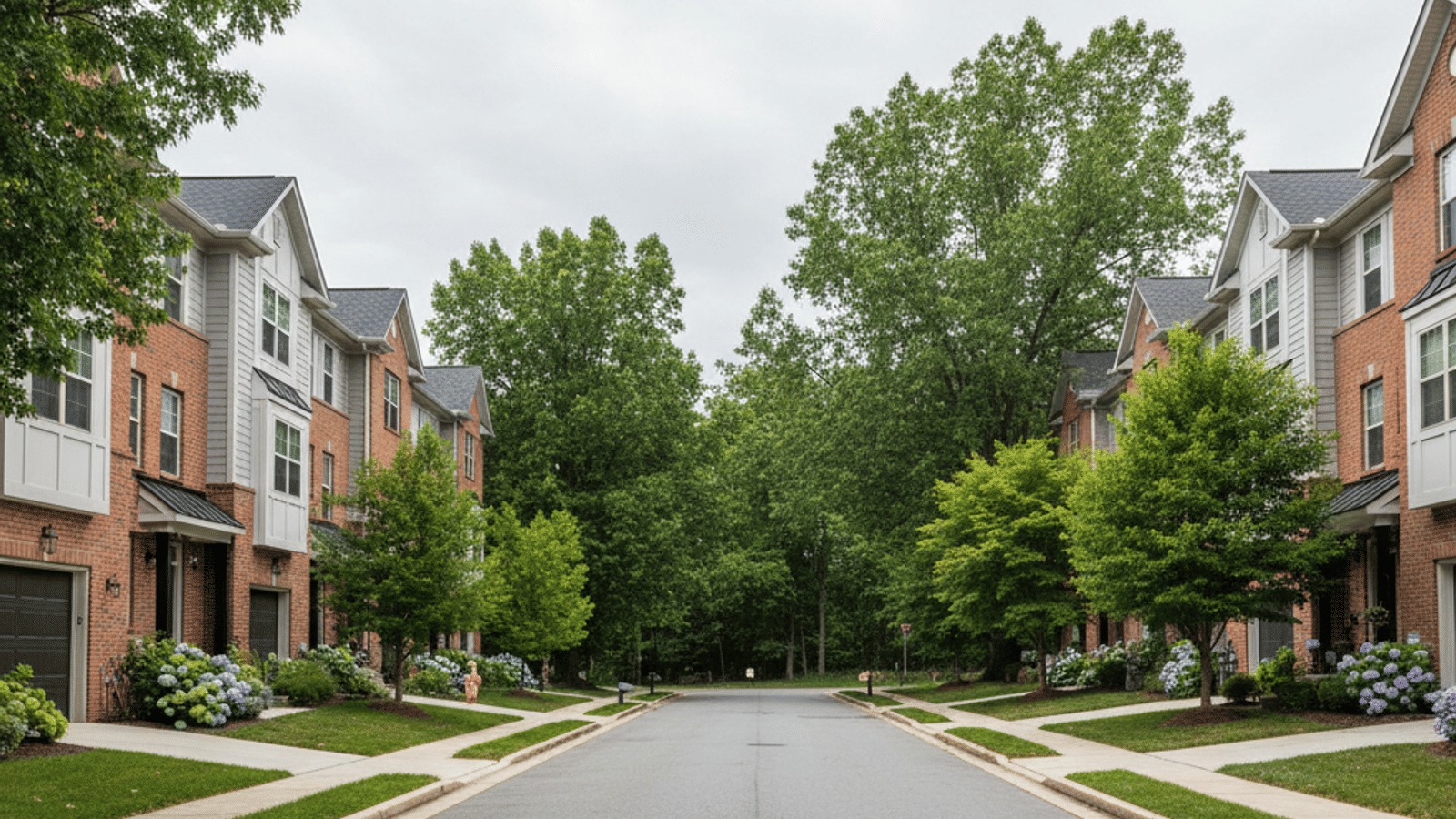
The Village at Tom’s Creek: If you prefer lower maintenance living, this area is worth a look. The townhomes here are generally newer than some of the established single-family neighborhoods. It is a solid option if you don’t want to spend your weekends doing major yard work or renovations.
Woodbine: For those who want a traditional single-family home with a bit more character, Woodbine features many homes built in the 80s and 90s. These homes often come in at a more approachable price point than new construction, though they might need a cosmetic update here and there.
Outlying Areas: If the $350,000 to $450,000 price range in town feels too steep, look toward Christiansburg or Riner. You typically get more land for your money, and the commute into Blacksburg is short and scenic.
Budgeting for Taxes and Closing Costs
When building your budget, you need to account for more than just the mortgage principal and interest. In Blacksburg, specifically, property taxes work differently than in the surrounding county.
If you buy within the Town of Blacksburg, you pay a “double tax.” You will pay the Montgomery County tax rate (roughly $0.76 per $100 of assessed value) plus the Town of Blacksburg tax (roughly $0.26 per $100). That totals about $1.02 per $100.
For example, on a home assessed at $400,000 inside town limits, you are looking at approximately $4,080 a year in property taxes. If you bought that same priced home just outside the town limits, your tax bill would be significantly lower.
You also need to prepare for closing costs. These typically run 2% to 3% of the purchase price. In Virginia, the buyer is responsible for paying for the home inspection, the appraisal, and their portion of transfer taxes. You can use a closing cost calculator to get a rough estimate, but your lender will give you the most accurate figures.
Finally, check for HOA fees. Many townhome communities like Hethwood or Knollwood have monthly dues. These fees cover exterior maintenance and amenities, which is convenient, but it is a monthly cost you must factor into your debt-to-income ratio.
Step-by-Step: From Pre-Approval to Closing
The process of buying a home here moves fast, especially in the spring. Here is how it usually plays out.
Get Pre-Approved Locally: This is critical. Local lenders understand the nuances of the Blacksburg market, such as which condo complexes are approved for financing and how student rental density affects loan approvals. National call-center lenders often miss these details, which can cause delays or denials at the last minute.
The Search: Inventory in the New River Valley is seasonal. You will see the most homes hit the market in spring and early summer. However, buying “off-cycle” in late fall or winter can sometimes mean less competition, even if there are fewer homes to choose from.
Making an Offer: In the competitive price brackets ($300,000 – $450,000), good homes go under contract quickly. You need to be prepared to move fast. In some cases, we still see escalation clauses being used to win competitive situations without vastly overpaying.
Inspections: Never skip the inspection, especially on older homes. Beyond the standard structural checks, radon is a very common issue in our mountain region. It is standard practice here to test for it, and remediation systems are effective if levels come back high.
The ‘Virginia Tech Factor’ on Housing
We can’t talk about Blacksburg real estate without mentioning the university. High rental demand means that affordable single-family homes often attract investors. This can make it harder for an owner-occupant to win a bid.
However, the university presence also adds value. Proximity to the Blacksburg Transit (BT) bus line is a huge plus for resale value and convenience. If you can find a home near a bus stop, you might save money on parking permits and gas, which helps offset the mortgage.
Frequently Asked Questions
Does Blacksburg have a first-time home buyer program?
While the Town of Blacksburg has limited direct financial aid, most buyers use state-level resources. The Virginia Housing programs are the primary source of help, offering down payment and closing cost assistance to eligible buyers in the area.
How much is a down payment on a house in Blacksburg?
You likely do not need 20% down. Most first-time buyers use Conventional loans with 3% down or FHA loans with 3.5% down. If you qualify for a VA loan or buy in a USDA-eligible area outside of town, you could pay 0% down.
Are property taxes higher in Blacksburg than Christiansburg?
Yes. Residents within the Town of Blacksburg pay both town and county taxes. Residents of Christiansburg also pay a town tax on top of county tax, but if you live in Montgomery County outside of any town limits, you only pay the county tax rate.
Can I get a USDA loan in Blacksburg?
Generally, no. The Town of Blacksburg is considered too populated for USDA Rural Development loans. However, just outside the town limits—in areas like Riner, Prices Fork, and parts of Christiansburg—you can often find homes that qualify for this 0% down program.