


For those buying a home in Blacksburg, VA, the median sale price sits around $496,000 – a figure that reflects consistent demand in the New River Valley. At any given time, you’re looking at roughly 66 active listings, and most properties go under contract in about 23 days.
Where you buy depends on what you’re after. A detached house in an established subdivision reads very differently from a condo within walking distance of the Virginia Tech campus. The housing stock runs the full range – from early 20th-century historic properties near downtown to newer construction spreading through the northern sections of town.
How Blacksburg, VA is Organized
U.S. Route 460 is the main artery here, running through the area as a four-lane divided bypass that ties the town to Christiansburg, Interstate 81, and the greater Roanoke Valley. It moves traffic efficiently, but it doesn’t drop you into downtown directly.
To get from the highway into the center of things, you’re using connector roads – North Main Street (also posted as Business 460) or Prices Fork Road being the primary ones. Those corridors are what carve the town into its distinct residential pockets, each with its own commute profile to major employers and the university.
Mapping the Local Areas
Blacksburg sits within Montgomery County and anchors the broader New River Valley region. Residential development radiates outward from the central campus and downtown core, which makes orientation fairly straightforward once you get the lay of the land.
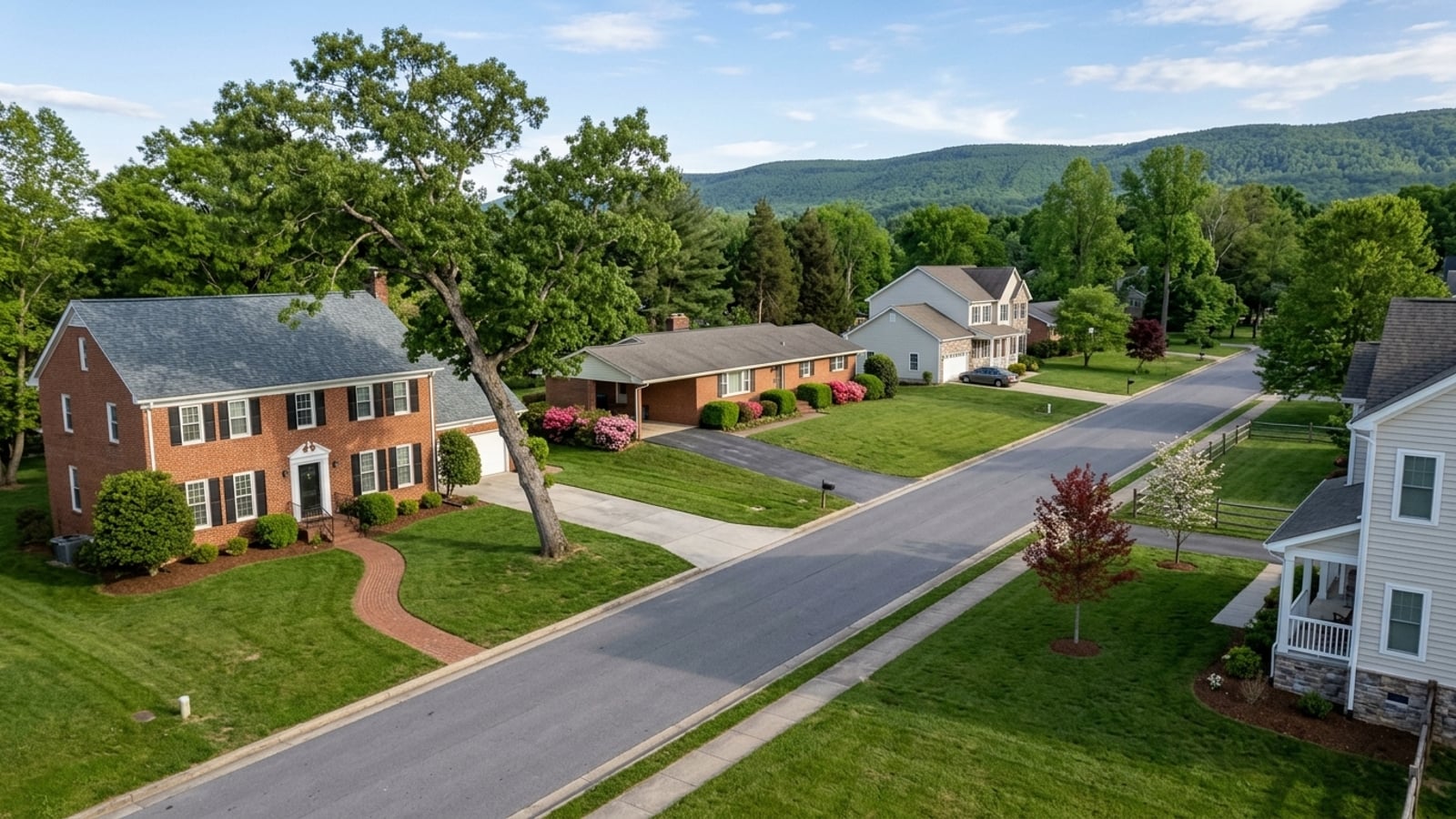
Neighborhoods to the north tend to feature newer subdivisions and larger lots. To the south and west, you’re more likely to find established subdivisions with mature trees and traditional single-family layouts.
Home Types and Prices Across Town
Single-family homes are averaging around $485,000, while townhomes come in slightly higher at roughly $505,000. Condos offer a lower entry point – generally $210,000 to $249,000 depending on size and how close they sit to campus.
The market isn’t soft. Nearly 16% of recently sold homes closed above asking price, and the average sale-to-list ratio holds at roughly 97%. Sellers aren’t leaving much on the table.
Single-Family and Attached Homes
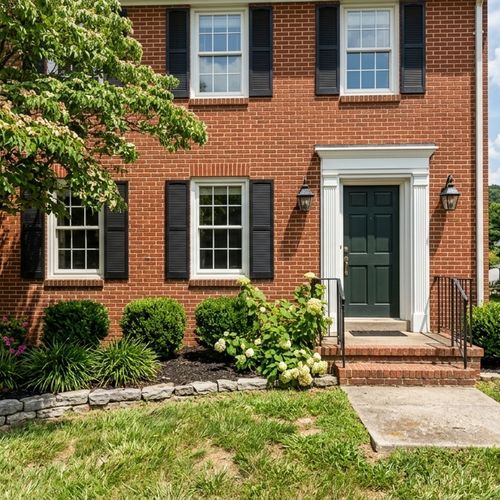
Detached single-family homes dominate the established neighborhoods outside the immediate downtown footprint. You’ll find everything from mid-century ranch layouts to multi-story colonial designs depending on which pocket you’re in.
Attached housing – townhomes and condominiums – concentrates along the main transit corridors. Lower maintenance and proximity to the university make these a practical choice for buyers who don’t want a long commute built into their daily routine.
Historic Districts and Newer Construction
If older architecture matters to you, there are two distinct areas worth knowing. The Blacksburg Historic District sits roughly north of Main and Jackson Streets. The Miller-Southside Residential Historic District contains 165 contributing buildings constructed between 1909 and 1941 – a tight range that gives the area a cohesive feel.
New construction is primarily in the northern part of town. Those homes generally price in the upper-mid tier, typically $500,000 to $650,000.
Profiles of Local Communities
Real estate records and local maps identify 15 distinct named communities within the town limits: Downtown Blacksburg, Tom’s Creek, Hethwood-Prices Fork, McBryde, Kabrich Crescent, Farmview-Ramble, Woodbine/Wyatt, Northend, Northside Park, Mountain View, Houston/Harrell, Miller Southside, Shenandoah, Glade/Westover, and Ellett/Jennelle.
Each one has its own mix of housing styles and lot sizes. Getting a feel for their distance to major landmarks is usually the fastest way to narrow down where to focus your search.
Areas Near the Virginia Tech Campus
Downtown Blacksburg, McBryde, and Northend sit closest to the university. The housing stock in these zones is a blend of historic homes, student-focused rental properties, and condominiums – and prices tend to reflect the location more than the square footage.
Walkability to commercial areas and campus facilities drives demand here. That’s not a knock on the neighborhoods; it’s just the reality of what you’re paying for.
Established Residential Subdivisions
Further out, communities like Hethwood-Prices Fork, Shenandoah, and Glade/Westover offer a more traditional suburban feel – predominantly detached single-family houses on larger lots.
Ellett/Jennelle and Mountain View give you quieter streets without losing access to Route 460. Some of the larger master-planned areas in this tier also include townhome options if you want attached housing without being right on top of campus.
Local Housing Market and Cost of Living
The officially reported median household income is around $42,433, but that number is pulled down by the student population. A more useful figure for full-time residents is closer to $69,000 in average household income.
With a median home price near $496,000 and only about 2.2 months of supply on the market, financing and timing both matter here. This isn’t a market where you have the luxury of deliberating for weeks.
School Zones and Crime Data
Blacksburg doesn’t have its own independent school district. All public schools operate under Montgomery County Public Schools, and attendance boundaries are set by the county based on your property address – so it’s worth confirming the specific school assignment for any address you’re seriously considering.
For crime data, the Town of Blacksburg maintains an official crime map on CrimeMapping.com. The Blacksburg Police Department website links directly to localized statistics and records if you want to dig into a specific area.
Frequently Asked Questions
What neighborhoods and communities are in Blacksburg, VA?
The town contains 15 primary named areas: Downtown Blacksburg, Tom’s Creek, Hethwood-Prices Fork, McBryde, Kabrich Crescent, Farmview-Ramble, Woodbine/Wyatt, Northend, Northside Park, Mountain View, Houston/Harrell, Miller Southside, Shenandoah, Glade/Westover, and Ellett/Jennelle.
What do homes cost across Blacksburg’s neighborhoods?
The median sale price is currently around $496,000. Single-family homes average about $485,000, townhomes average roughly $505,000, and condominiums generally range from $210,000 to $249,000.
How can I research crime data for a specific Blacksburg neighborhood?
You can search specific addresses or zip codes using the official crime map on CrimeMapping.com. The Blacksburg Police Department also links directly to those statistics on their municipal website.
What school districts serve Blacksburg’s neighborhoods?
All public schools in town fall under Montgomery County Public Schools. That county-wide division manages attendance zones for Blacksburg High, Blacksburg Middle, and the five local elementary schools based on property addresses.
Which Blacksburg neighborhoods are best for families versus those largely populated by Virginia Tech students?
Areas immediately surrounding the campus – Downtown and McBryde in particular – have a high concentration of student housing and condominiums. Buyers focused on traditional single-family homes tend to look further out, in subdivisions like Shenandoah or Glade/Westover.
How quickly do homes go under contract in the most sought-after Blacksburg neighborhoods?
The current median is 23 days on market before a property goes under contract. Well-priced homes move faster – nearly 16% of recent listings closed above their asking price.
What type of housing is available in the Hethwood-Prices Fork area?
Buyers looking in this area will find a more traditional suburban environment compared to neighborhoods right next to campus. The Hethwood-Prices Fork community primarily features detached single-family houses situated on larger lots. It also sits along a major connector road, providing straightforward access to downtown.
How does the Route 460 bypass impact local commuting?
This four-lane divided highway serves as the primary artery connecting the town to Christiansburg and Interstate 81. Neighborhoods near the South Main 460 corridor provide efficient travel routes for residents commuting toward the greater Roanoke Valley. Drivers use connector roads to transition from this main highway into the central residential pockets.